Hello!
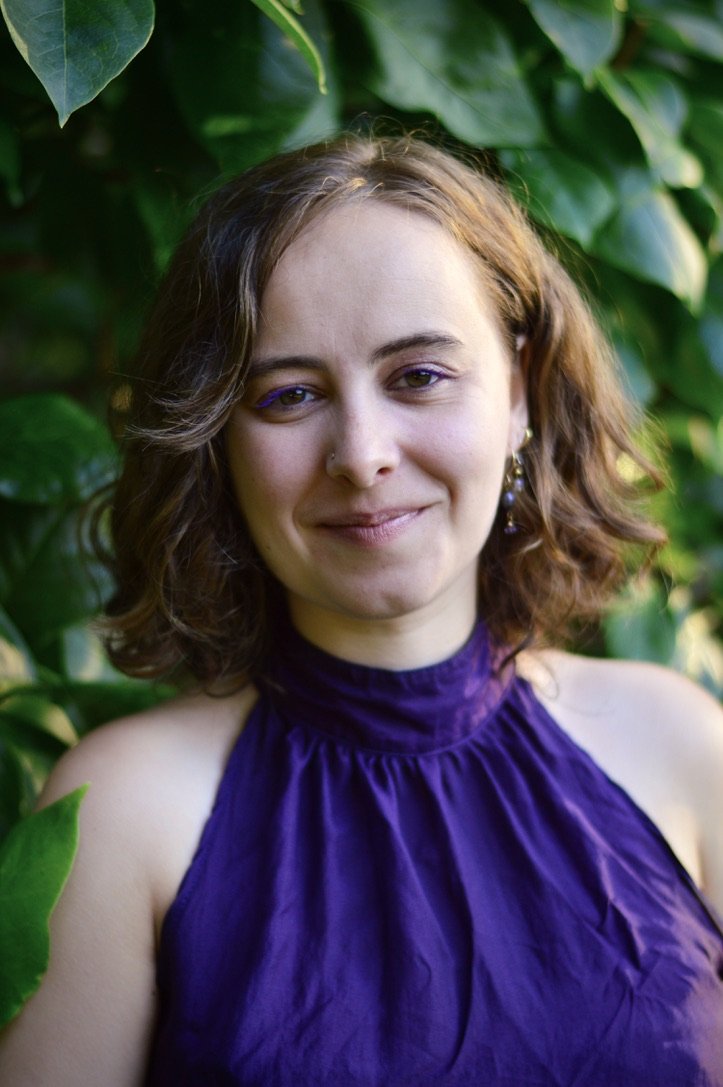
I’m Katree (She/They)
I am a creative being at heart. I bounce between different art forms and creative processes which fuel up my life. In all of the systemic challenges we face, we can ignite change with our hearts, our hands, and our voices...
I am a registered social worker in BC and Alberta with a counselling practice for individuals, couples, and familial relationships.
We can build a warm alliance where you can share your difficulties, invite your feelings in to the present and release them, and build understanding and compassion while being held with care and empathy.
When we work on understanding ourselves, we improve our relationships. When we build strong connections with others, we become more resilient and we can end up with more capacity to create lasting change. When we choose change, it ripples out to the world around us.

Who do I support?
-
Everyone is welcome here in all your diversity, no matter what you’re facing.
If I think what you’re dealing with is outside of my scope of practice, I will tell you directly. I can help you access counselling that is better directed at the challenges you are facing, or help you connect with more specific resources while continuing our supportive work. -
You can book in by yourself, or for yourself and a partner.
By request only, I will see adult child and parents for relationship counselling as well. -
Anyone with sexually diverse identities are welcome in my space. As a Bi and Queer counsellor, this is where I’m situated.
If you are Non-Binary, Trans femme, Trans masc, Queer, Gender Questioning, Ace or Aro, you are welcome.
If you want to explore topics related to your identity, we can do that. If you just want to access a space where you don’t have to explain and educate your counsellor a bunch (I’ve been there,) I’m here for it.
You are also very welcome to come see me see me if you are straight or cisgender. -
Let’s make room to talk about medical trauma and ableism?
Is this a layer of your experience that you want your counsellor to have awareness of? Does it need room to be addressed and would you like us to bring some focus to it?
I have lived experience of invisible disability, and fluctuations in my physical abilities.
Please let me know if there are any accommodations you need in order to access counselling. -
As a white settler living and learning on the unceded Indigenous lands of the Lekwungen and W̱SÁNEĆ peoples, I am committed to anti-racism and decolonizing in my practice. I was born on the stolen lands of the Klallam peoples. My ancestors hail from Germany, France, England, Belgium and Poland.
I have lost contact with my origins and I cherish the lands and waters where I was born. Through my degree I have sought to learn about colonialism’s ongoing systemic harms. I consider it both personal and professional work to see and name it, critically deconstruct it, and be a part of the process of change and healing.
If you want to learn more about decolonizing as part of our work together let me know!
My degree in social work focused on intersectionality and the ways systemic harm shows up through: colonial white supremacy, capitalism, patriarchy, heteronormativity and ableism. I am able to view your experience through the many lenses of systemic oppression, and I will bring those lenses in.
If you are BIPOC you are welcome to see if this feels like a good space here. I also invite you to ask for support in connecting with a counsellor of colour or one that can approach counselling through your own culture. Let me know if you’re looking for that kind of help. -
ADHD, Autism, CPTSD, Anxiety, Depression, Bipolar and other DSM diagnoses
I come at neurodiversity from an anti-oppressive and anti-pathologizing perspective. As neurodivergent people, we have really understandable responses to difficult life experiences such as: when our nervous systems become overwhelmed, when we experience trust ruptures early in our lives, when our brains have always worked differently, learned differently, or focused differently than society seems to expect.
Can we normalize the idea that humans need diversity for survival? Society expects too much conformity of us to a point that is inhuman.
Sometimes we need support in finding ways to get things done in the way we need to for basic life survival. We can talk about that and seek skills and tools and accountability buddies.
Sometimes we need to exercise our self-understanding and compassion muscles so that we can alleviate judgement and get unstuck.
Does it feel like your brain is different? You are welcome here, and you don’t need to apologize for being different. My brain is different too. -
The Non-monogamy spectrum includes: Polyamory, Swinging, Relationship Anarchy, and a wide variety of open relationship configurations often with some overlap from the Kink community. The key being that these are discussed and agreed upon by all who are within them.
If you’re thinking about opening up, or have opened up and feel like its really challenging, or if you are struggling because your partner has decided ENM (ethical non-monogamy) is for them but you aren’t feeling it…
Non-monogamy can expose opportunities for growth, whether we’re ready for them or not. If you’re experiencing the feeling of jealousy in the pit of your stomach or on a journey of cultivating compersion, I can relate to you there. I know sometimes it can be tough to distinguish between where to challenge yourself and where to set boundaries, but together we can sort through how best to honour your values.My practice is informed by 14 years of my own ENM experiences, years of polyamory discussion groups, ‘Ethical Non-Monogamy for Therapists’ by Cherish Dorington and Cora Bilsker,
and further poly literature.If you identify with a form of ENM you are welcome here whether this is the focus of our work or not.
I will invite you to be curious about creating change in your life as we build a warm alliance that helps you feel supported in that process.
Exploring what you feel is causing distress can help us understand where to set our intentions for the deeper work that we do together. Our loved ones don’t always have the capacity to hold all of us. If there’s something in you that feels too painful to share with others, I can hold that with you.
In the counselling space, I believe in your capacity, creativity, and power to heal. You will have room to connect to yourself by learning about your personal values and beliefs. In this learning you may find that you have been carrying someone else’s values and you can put them down in order to have a more authentic experience of life.
Approach
Frameworks
Internal Family Systems model
Also known as “Parts work” Conceptualizing our minds containing many parts can help us understand how key experiences have had lasting impacts on our mental health and behaviours and provide possibilities for healing!
Somatic approach
Body based approach that invites applying mindfulness internally to your own body and doing either guided or self-guided internal work to notice and welcome feelings, allow them to be felt, processed and even released.
Systems approach / Anti-oppressive practice
How do your environment and our overlapping social systems impact your life experience? Can we recognize the extent and the limits of our responsibilities, bring compassion and release judgment about your experience?
ACT
Acceptance and Comittment Therapy aims to help us accept how our brains work even when we don’t like how they do what they are doing, and commit to ourselves, to our values, to changing choices and behaviours that don’t align with our values, and be present with ourselves.
Lenses of Learning
My social work learning focused on anti-oppressive practice, anti-racism, decolonizing, holism and Indigenous worldviews, intersectional feminist perspectives, gender theory, Trans theory, and Queer theory. Theories on neoliberalism, capitalism, globalization, environmental justice, disability, sociology, psychology and critiques of psychology are all lenses that inform my practice.